Once a label's design and material are chosen, the application method still needs deciding, and this choice affects comfort, durability and how quickly labels can be applied at production scale. Heat transfer and sew-in application solve the same problem in different ways, each with its own trade-offs.
Understand how each application method works
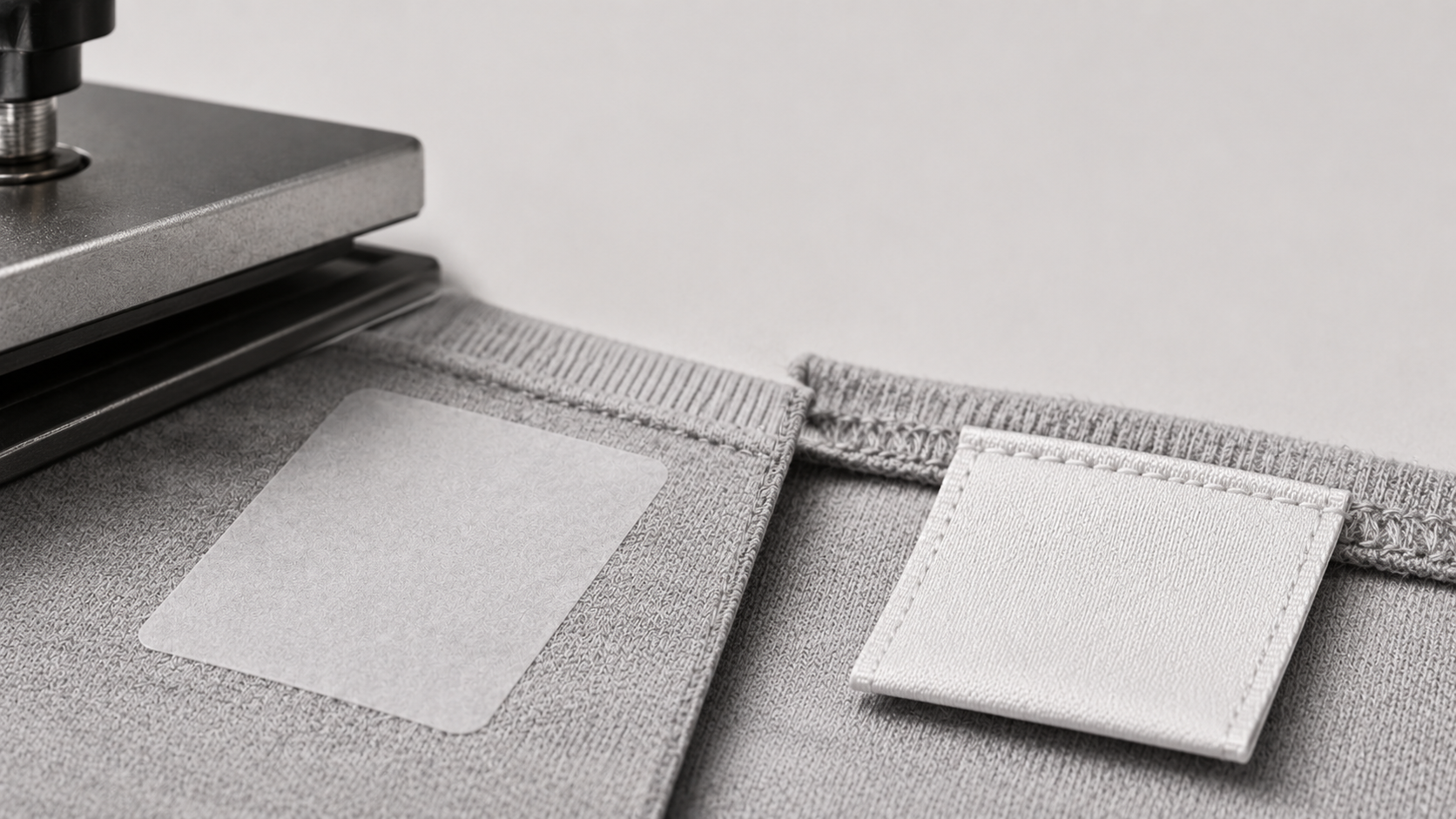
Heat transfer labels are applied using heat and pressure to bond a printed film or ink layer directly onto the fabric surface, with no thread or stitching involved. This creates a completely flat, seamless finish where the label sits flush against the garment.
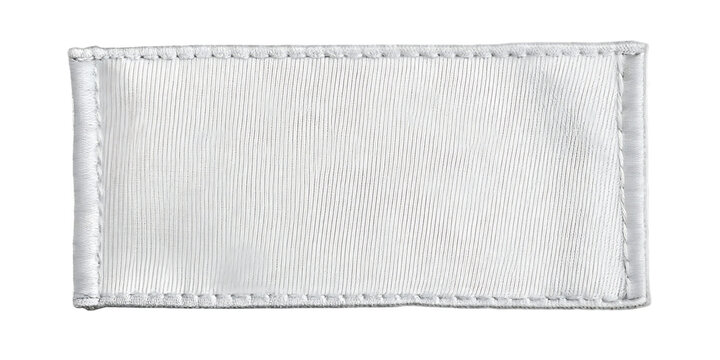
Sew-in labels are physically stitched onto or into the garment, usually at a seam, collar or hem, using the same sewing process as the rest of the garment's construction. This keeps the label as a distinct, separate piece attached mechanically rather than bonded to the fabric itself.
- Heat transfer labels bond directly to fabric using heat and pressure, with no stitching.
- Sew-in labels are physically stitched onto the garment as a separate piece.
- Heat transfer creates a flat, seamless finish flush with the fabric.
- Sew-in labels remain a distinct, separate element attached at a seam or edge.
Match the method to fabric type and stretch
Heat transfer labels work particularly well on activewear, swimwear and other stretch fabrics, since there's no stitching to restrict movement or create a rigid point on an otherwise flexible garment. This is a major reason activewear brands favour heat transfer over sew-in for size and care labels.
Sew-in labels work reliably across most woven and knit fabrics but can create a slightly stiffer point at the attachment area, which matters less for structured garments like jackets or trousers but is worth considering for very lightweight or stretch-heavy fabrics.
- Use heat transfer labels for activewear, swimwear and stretch-heavy fabrics.
- Use sew-in labels for structured garments like jackets, trousers or wovens.
- Consider heat transfer when a rigid stitched point would restrict fabric movement.
- Test heat transfer adhesion on the specific fabric blend before a full production run.
Consider comfort at points of skin contact
Heat transfer labels sit flush against the skin with no raised edge or stitching to catch or irritate, which makes them a common choice for neck labels and waistbands where comfort matters most. This is part of why many mainstream apparel brands moved neck labels to heat transfer over the past decade.
Sew-in labels can be more noticeable against skin due to the stitched edge and slight thickness of the label material itself, though this is less of a concern at placements away from direct, sustained skin contact, such as a side seam or hem tag.
- Prefer heat transfer for neck labels and waistbands where comfort matters most.
- Sew-in labels are less of a concern at placements away from sustained skin contact.
- Test comfort on an actual worn garment sample, not just a swatch.
- Consider customer feedback on itchiness when evaluating an existing sew-in neck label.
Weigh durability and washing performance
Sew-in labels generally hold up reliably over many wash cycles, since the stitching mechanically secures the label regardless of what happens to the surface printing or weave over time. This makes sew-in a dependable default for garments expected to be laundered frequently over a long lifespan.
Heat transfer durability depends heavily on the transfer material and application quality, and while modern heat transfer films can perform well through many wash cycles, they are more prone to gradual peeling or cracking at the edges compared with a securely sewn label, particularly with harsher washing or drying conditions.
- Sew-in labels generally offer more consistent durability over frequent washing.
- Heat transfer durability depends on the transfer material and application quality.
- Confirm expected wash count and care instructions before choosing a method.
- Ask for wash-test results from the supplier when durability is a key requirement.
Factor in production speed and cost at scale
Heat transfer application is generally faster at production scale, since it can be applied with heat press equipment as a quick, single step without the slower motion of a sewing operation. This makes it a practical choice for high-volume runs where labelling speed affects overall production throughput.
Sew-in labels add a stitching step to garment assembly, which takes marginally longer per unit, though this is often absorbed into existing sewing operations rather than adding a distinct new production stage, since most garments already go through multiple stitching steps regardless of label method.
- Heat transfer is generally faster to apply at high production volumes.
- Sew-in labelling adds a stitching step, though often absorbed into existing sewing operations.
- Compare per-unit labelling time between methods for very high-volume orders.
- Confirm equipment and setup requirements with the manufacturer before committing to a method.
Common questions
Which label application is better for activewear?
Heat transfer labels are generally preferred for activewear and stretch fabrics, since there's no stitching to restrict movement or create a rigid point on a flexible garment.
Do sew-in labels last longer than heat transfer labels?
Generally yes. Sew-in labels are mechanically secured by stitching and tend to hold up more consistently over many wash cycles, while heat transfer durability depends more on the specific material and application quality.
Is heat transfer application faster than sewing in labels?
Yes, heat transfer is generally faster at production scale since it applies in a single heat-press step, while sew-in labelling adds a stitching step to garment assembly.