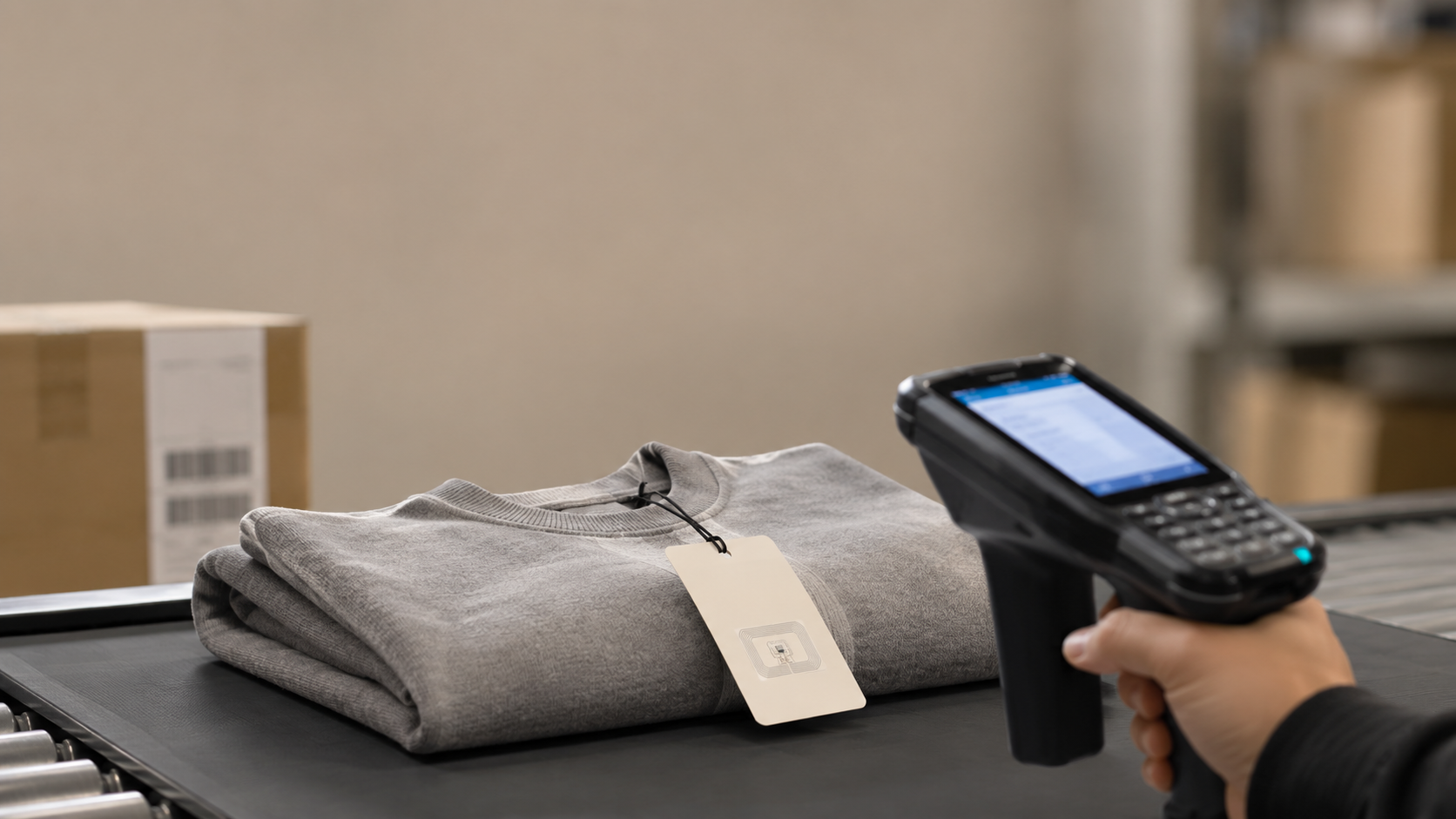
Apparel is one of the categories where RFID delivers the clearest, most measurable benefit, since it directly improves inventory accuracy in a category known for high SKU counts and frequent size and colour variation. Rolling it out well depends less on the tag itself and more on where tagging happens and how the data is used afterward.
Decide where in the supply chain tagging happens
Source tagging, meaning applying RFID tags at the manufacturing or packing stage before the product ever reaches a store, generally produces more accurate and consistent data than tagging later in the supply chain, since it removes the risk of items being missed or tagged inconsistently at a distribution centre or store level.
Tagging further downstream, such as at a distribution centre, can still work but usually requires more oversight to ensure consistent coverage across every unit, since it adds an extra handling step where items can be skipped or mistagged.
- Prefer source tagging at manufacturing for the most consistent data accuracy.
- Expect downstream tagging to need more oversight to maintain full coverage.
- Confirm with manufacturing partners whether source tagging is feasible for the order.
- Audit tag coverage periodically regardless of where tagging happens in the chain.
Choose a tag placement that survives the garment's lifecycle
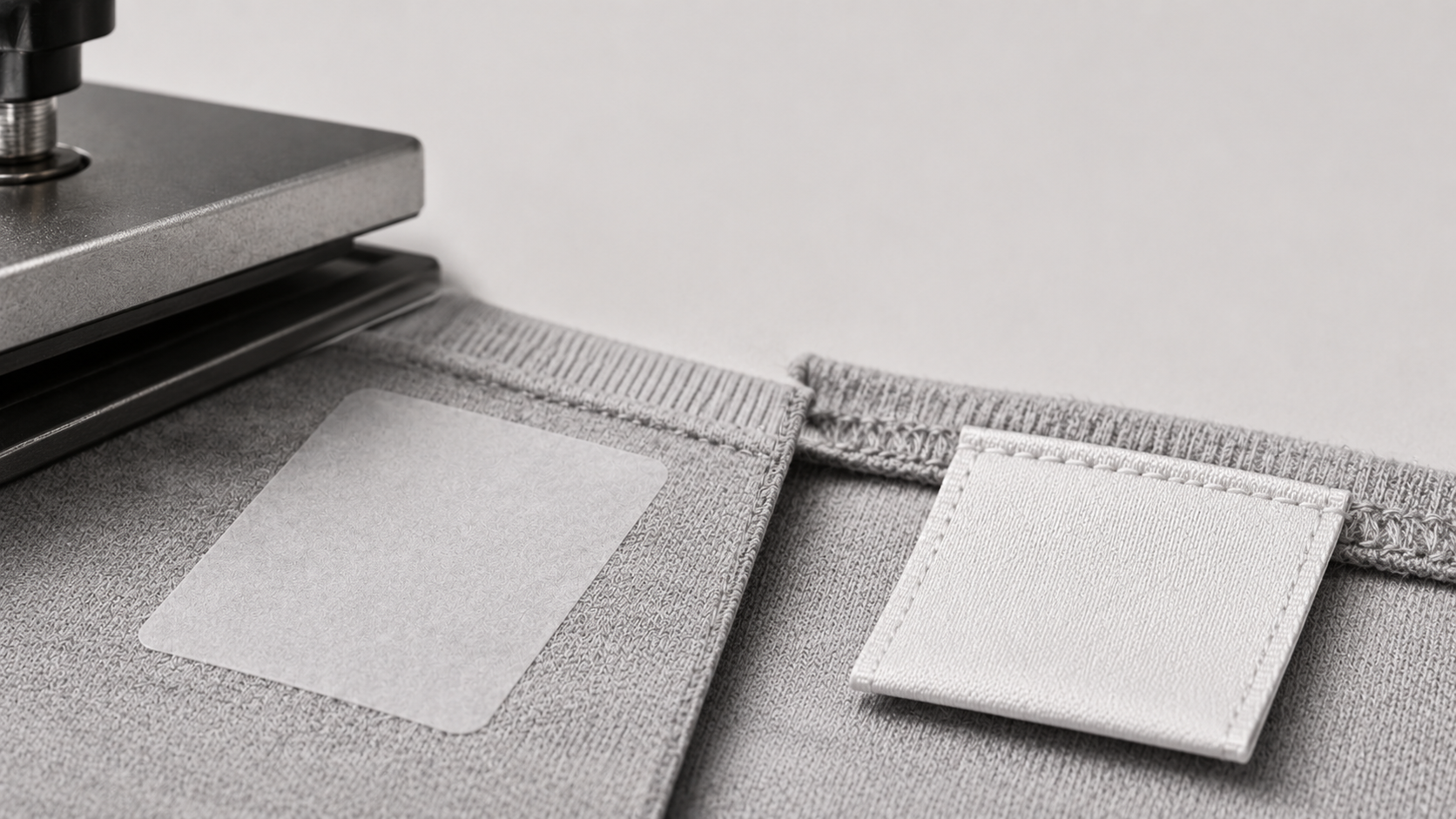
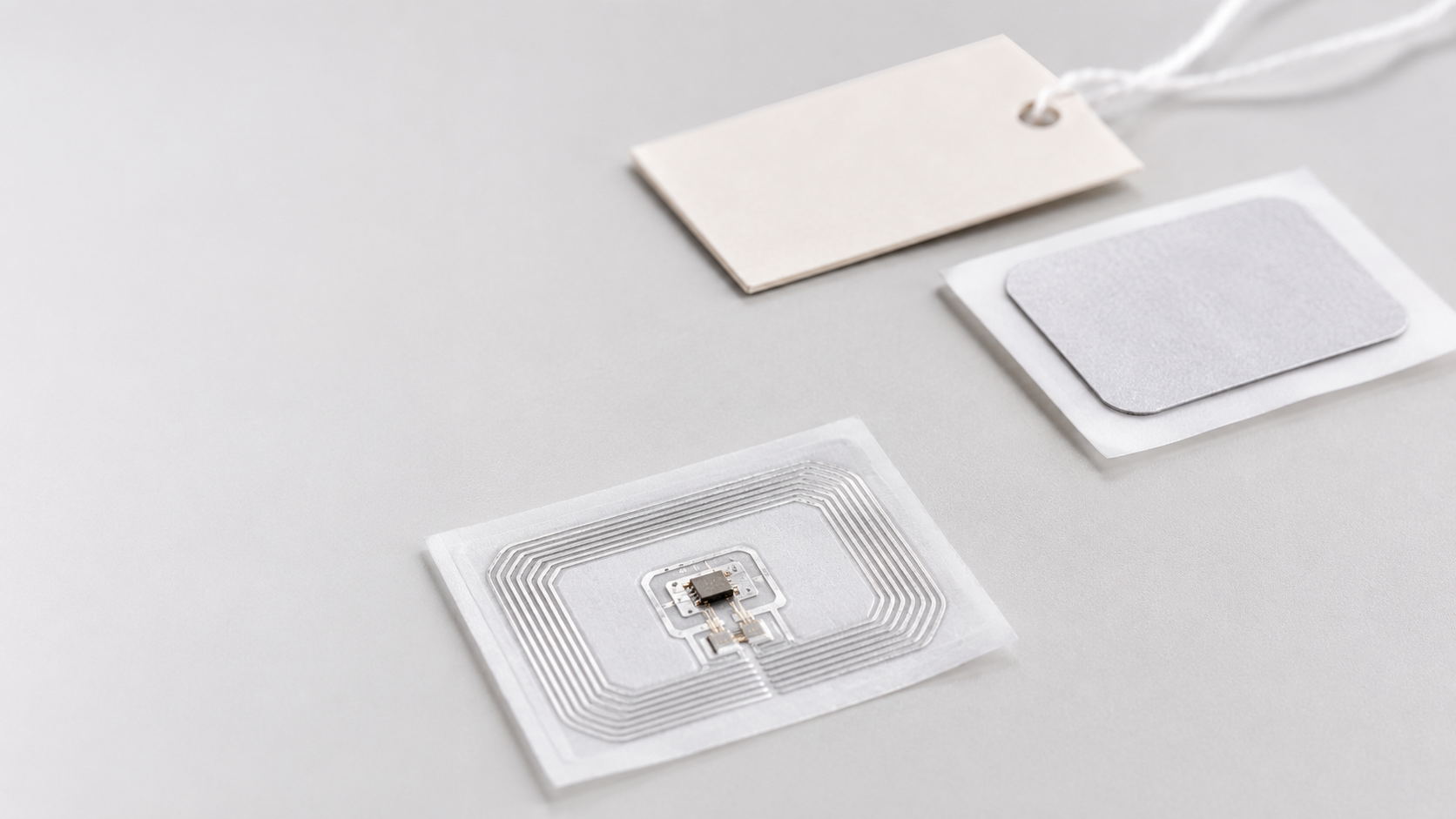
For apparel, RFID tags are commonly placed on a removable price ticket or hang tag rather than sewn permanently into the garment, which allows the tag to be removed at point of sale if the brand doesn't want RFID tracking to continue with the consumer. This is currently the more common approach for retail inventory use cases.
Permanent, sewn-in tags are used when a brand wants tracking to continue after purchase, such as for authentication or extended supply chain visibility, but this requires more careful placement to avoid the tag being felt or seen by the wearer, and needs to survive washing if the garment is expected to be laundered.
- Use removable hang tag placement for standard retail inventory tracking.
- Use permanent sewn-in tags only when tracking after purchase is genuinely needed.
- Confirm wash durability requirements for any permanently attached tag.
- Position sewn-in tags to avoid discomfort or visibility to the wearer.
Plan the encoding and data structure before the first order
Each tag typically needs to be encoded with a unique identifier that links back to SKU, size, colour and batch information, which needs to match how the brand's inventory or point-of-sale system expects to read that data. Deciding this structure before placing the first tagged order avoids a costly re-tagging exercise later.
It also helps to confirm early whether tags will be encoded by the tag supplier, the garment manufacturer, or a separate service, since each option has different lead times and quality control implications for a rollout at scale.
- Define the encoding structure (SKU, size, colour, batch) before the first tagged order.
- Confirm who handles encoding: tag supplier, manufacturer, or a separate service.
- Align encoding format with the existing inventory or point-of-sale system in advance.
- Avoid finalising a large tagged order before the encoding workflow has been tested.
Start with a pilot before a full rollout
Rolling out RFID across an entire product range or store network at once makes it harder to catch placement issues, encoding errors or read-rate problems before they affect a large volume of stock. A pilot limited to a specific product category or a handful of stores allows these issues to surface and be corrected on a smaller, more manageable scale.
A pilot also provides a clearer, more controlled way to measure the actual inventory accuracy improvement before committing budget to a full rollout, since the benefit of RFID tagging is easiest to justify internally when it's backed by measured results rather than an estimate.
- Limit the initial rollout to a specific product category or a small group of stores.
- Use the pilot to catch placement, encoding or read-rate issues early.
- Measure actual inventory accuracy improvement during the pilot before scaling up.
- Use pilot results to build the internal case for a full rollout.
Coordinate reader infrastructure alongside the tagging plan
Tags are only useful if there's reliable infrastructure to read them, whether that's handheld readers for cycle counts, fixed readers at store entrances for loss prevention, or portal readers at distribution centres for receiving and shipping. Rolling out tags without the matching reader infrastructure in place limits the actual benefit realised from tagging.
It's worth sequencing the rollout so that reader infrastructure is in place, or at least being installed in parallel, rather than tagging a large volume of stock well before there's a reliable way to read it.
- Confirm reader infrastructure (handheld, fixed, or portal) alongside the tagging plan.
- Avoid tagging large stock volumes well ahead of having readers in place.
- Sequence rollout so tagging and reader installation happen in parallel where possible.
- Test end-to-end read reliability with real infrastructure before scaling the tagged volume.
Common questions
Is source tagging better than tagging at a distribution centre?
Source tagging at the manufacturing stage generally produces more consistent, accurate data since it removes the risk of items being missed or inconsistently tagged further down the supply chain.
Should apparel RFID tags be removable or sewn in?
Most retail inventory use cases use a removable hang tag placement, which can be taken off at point of sale. Permanent sewn-in tags are only needed when tracking is meant to continue after purchase.
Should a brand roll out RFID across all stores at once?
A phased pilot in a specific product category or a small group of stores is generally recommended, since it allows placement, encoding and read-rate issues to be caught and corrected before a full rollout.