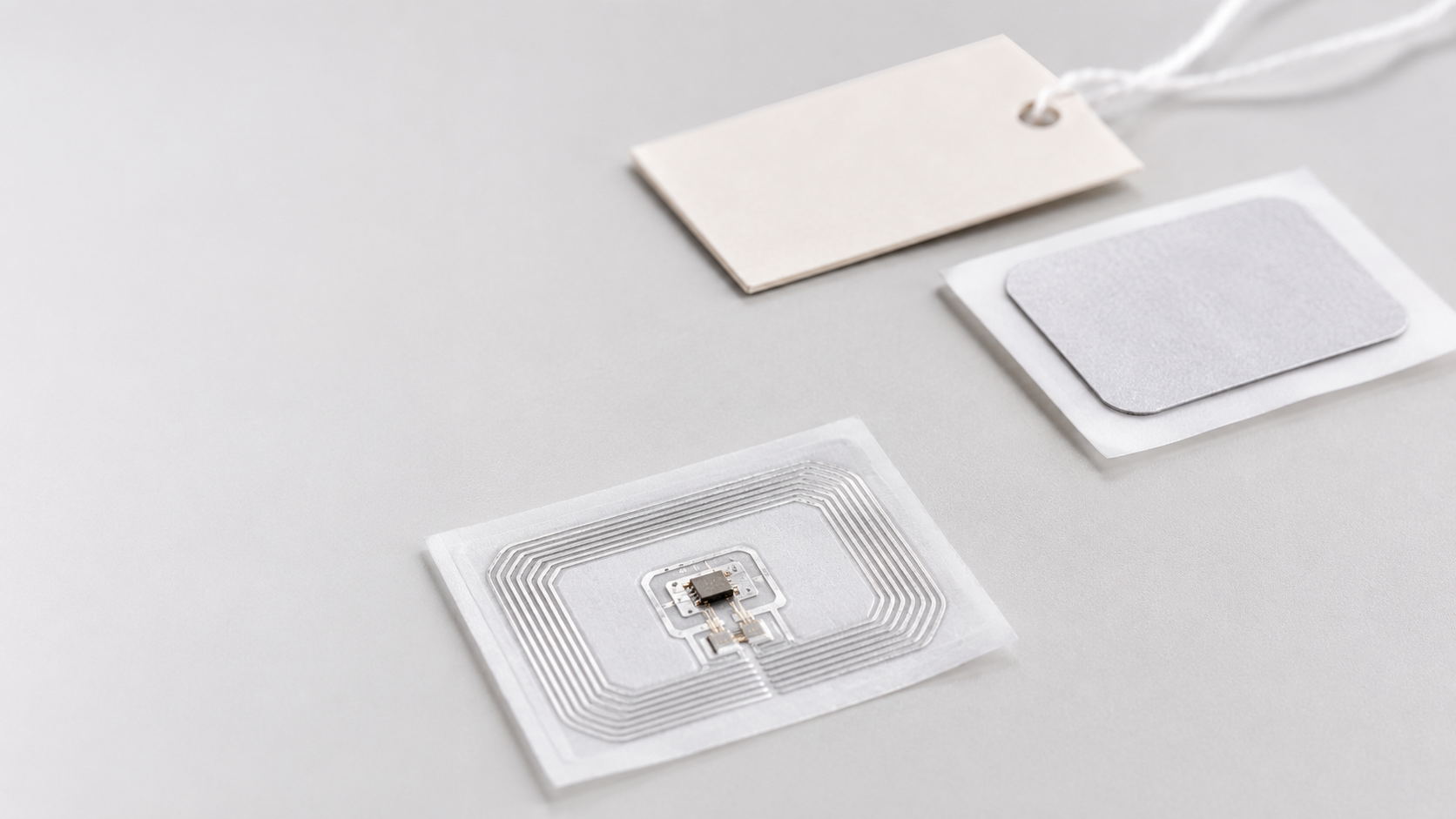
An RFID tag that reads perfectly on a supplier's sample sheet can behave differently once it's attached to the actual product, packed for shipping, or read from a realistic distance in a real facility. Testing a small batch properly before committing to a bulk order catches problems while they're still cheap to fix.
Test read range on the actual product, not a blank surface
Read range figures from a tag supplier are usually measured under controlled, ideal conditions, which rarely match how the tag will actually be read once attached to a real product. Materials like metal, liquid, or dense fabric can noticeably reduce effective read range compared with the quoted figure.
Testing the tag attached to the actual product, in the actual packaging it will ship in, gives a much more realistic read-range figure to plan reader placement and workflow around, rather than relying on a specification sheet that assumes ideal conditions.
- Test read range with the tag attached to the actual product and packaging.
- Expect reduced read range near metal, liquid or dense fabric compared to spec sheet figures.
- Use the tested, real-world range to plan reader placement and workflow.
- Retest if the product packaging or material changes after initial testing.
Check read reliability at the expected scanning distance and angle
A tag might read reliably when a reader is pointed directly at it but fail or become inconsistent at an angle or from the actual distance used in daily operations, such as a portal reader at a doorway or a handheld reader during a stock count. It's worth testing from multiple realistic angles and distances rather than a single best-case position.
This is particularly important for bulk-read scenarios, where tags at the edge or back of a stacked group may read less reliably than a single tag tested in isolation, so testing a small representative group together gives a better sense of real bulk-read performance.
- Test read reliability at multiple realistic angles, not just a direct best-case position.
- Test at the actual distance readers will be used in daily operations.
- Test bulk-read performance with a small group of tags together, not just a single tag.
- Note any positions or angles where reads become inconsistent for workflow planning.
Test durability under the product's real handling conditions
Tags that will be attached to apparel need to be tested through the expected number of wash cycles if permanently sewn in, since washing, drying and general wear can degrade the antenna or chip connection over time even if the tag looks physically intact. Tags on shipped goods should be tested for handling during transit, including drops, stacking pressure and exposure to moisture if relevant.
It's worth defining a specific durability standard, such as a minimum number of wash cycles or a drop-test threshold, and testing against that standard rather than assuming the tag will hold up simply because it looks sturdy in hand.
- Test permanently attached tags through the expected number of wash cycles.
- Test shipped-product tags against realistic transit conditions like drops and stacking.
- Define a specific durability standard before testing rather than relying on visual inspection.
- Retest after any change in tag material, adhesive or attachment method.
Verify encoding accuracy across the full test batch
It's not enough to confirm that a tag reads; the read data needs to match the intended encoded identifier correctly and consistently across every tag in the test batch, since an encoding error that affects even a small percentage of a bulk order can create significant downstream inventory problems.
Testing should include scanning every tag in the sample batch and cross-checking the returned data against the expected encoding record, rather than spot-checking a handful of tags and assuming the rest of the batch matches.
- Scan every tag in the test batch and verify data against the expected encoding record.
- Avoid spot-checking only a few tags and assuming the rest match.
- Flag any encoding mismatches to the supplier before scaling to a full order.
- Confirm the encoding verification process the supplier uses for full production batches.
Build a small pilot batch into the order timeline
Testing takes time, and rushing straight from a supplier's sample to a full bulk order removes the opportunity to catch durability, read-range or encoding issues before they affect a large volume of tagged stock. Building a small pilot batch and a testing window into the project timeline avoids this risk.
This is particularly worth doing for a new tag type, a new product category, or a new supplier, where there's less existing evidence that the tag will perform reliably under the specific conditions of the business's operations.
- Build a pilot batch and testing window into the project timeline before a full order.
- Prioritise pilot testing for new tag types, product categories or suppliers.
- Avoid moving straight from a supplier sample to a full bulk order.
- Use pilot results to adjust the specification before committing to full production.
Common questions
Why does a tag's real-world read range differ from the supplier's spec sheet?
Spec sheet figures are usually measured under ideal conditions. Materials like metal, liquid or dense fabric, along with the actual product and packaging, can noticeably reduce effective read range in practice.
How should RFID tags be tested for apparel that gets washed?
Permanently attached tags should be tested through the expected number of wash cycles against a defined durability standard, since washing and drying can degrade the antenna or chip connection over time.
Is it enough to confirm that RFID tags scan successfully?
No. The scanned data also needs to be verified against the intended encoding record across the full test batch, since an encoding error affecting even a small percentage of tags can create downstream inventory problems.