Handle bags and gusset bags are sometimes treated as interchangeable retail packaging, but the difference in construction changes how much they can hold, how they sit when filled, and how they look on a shelf or in a customer's hand. Choosing between them comes down to what's actually going inside.
Understand the structural difference
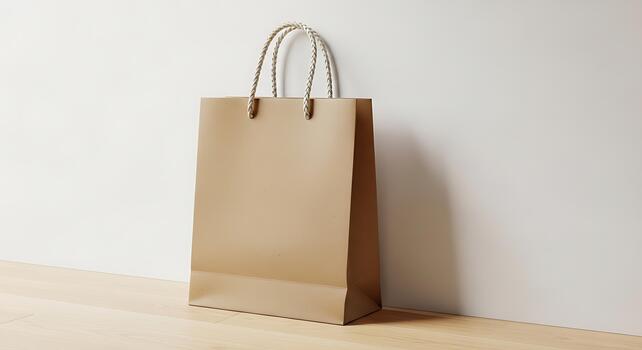
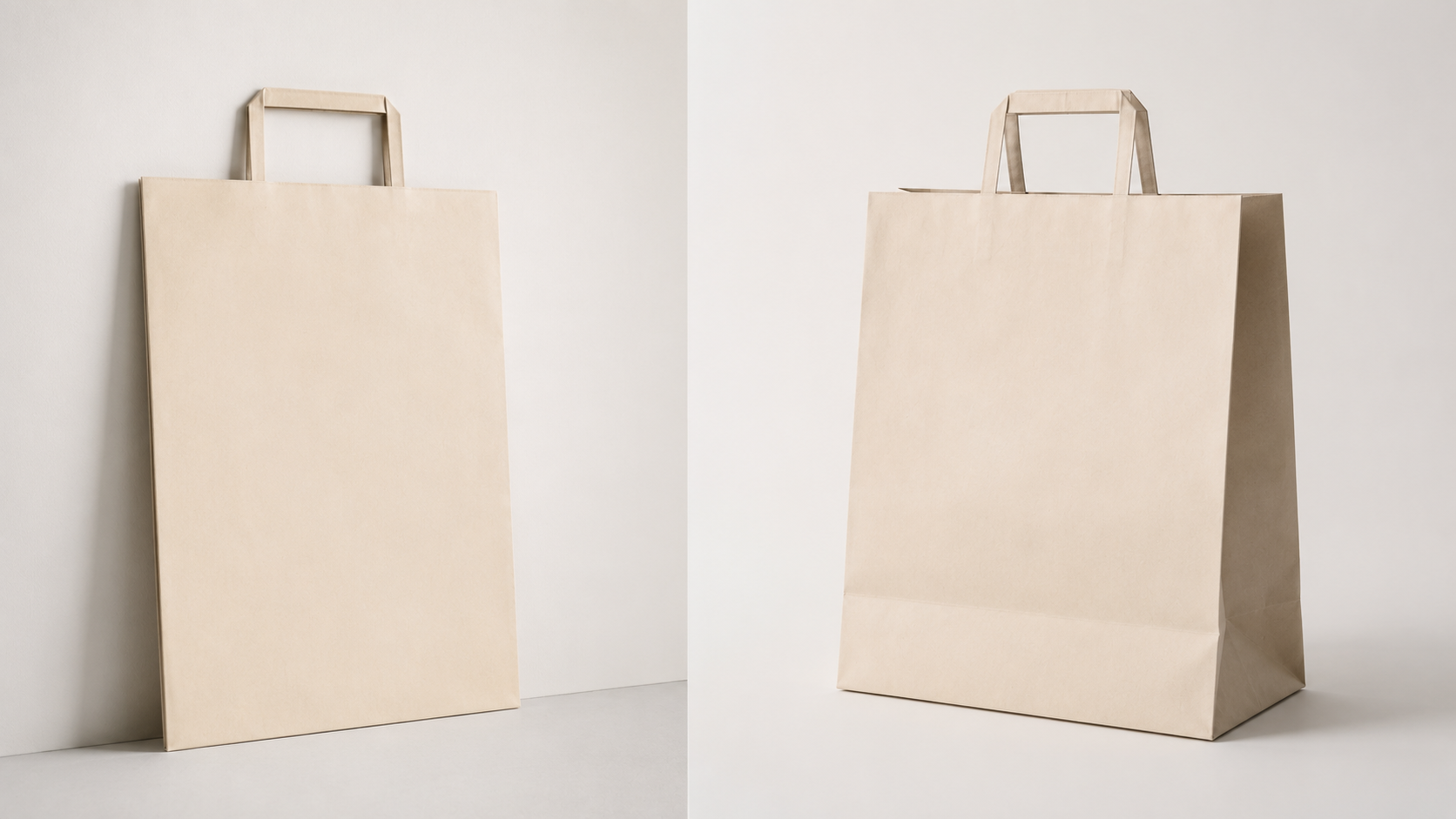
A handle bag, in its simplest form, is built from two flat panels joined at the sides and base, with little to no expansion at the sides when filled. This keeps the bag slim and flat-profiled, which suits thinner or flatter items that don't need extra depth.
A gusset bag includes folded side or bottom panels that expand outward when the bag is filled, giving it a boxier, three-dimensional shape with significantly more internal volume than a flat handle bag of the same width and height.
- Handle bags use flat side panels with little to no expansion.
- Gusset bags include folded panels that expand for added depth and volume.
- Handle bags suit slim, flatter items; gusset bags suit bulkier or multiple items.
- The gusset also affects how the bag stands and displays once filled.
Match the format to what the bag needs to carry
Handle bags work well for single flat items such as clothing, books, or flat gift sets, where the product doesn't need much internal depth and a slimmer bag looks cleaner both in hand and on a shelf. Forcing a bulky or multi-item order into a flat handle bag usually results in a strained, overfilled look and added stress on the seams.
Gusset bags suit bulkier single items, multiple products bundled together, or anything with an irregular shape that needs more internal room to sit comfortably without the bag distorting.
- Use handle bags for single flat items like clothing, books or flat gift sets.
- Use gusset bags for bulkier items or multiple products bundled in one bag.
- Avoid forcing bulky orders into flat handle bags, which strains seams and looks overfilled.
- Consider the item's actual shape and volume before defaulting to either format.
Consider how the bag needs to stand or display
Gusset bags generally stand upright more naturally when filled, since the expanded base gives them a wider footprint, which matters for retail environments where the bag itself is part of the in-store or shelf presentation. This makes gusseted formats a common choice for boutique and gift retail settings.
Handle bags tend to lean or fold when set down, since the flat base doesn't offer the same standing stability, which is generally fine for bags meant to be carried and handed over rather than displayed upright on their own.
- Use gusset bags when the bag needs to stand upright for retail display.
- Handle bags are better suited to being carried and handed over rather than displayed.
- Confirm display requirements early, since this affects base construction and reinforcement needs.
- Boutique and gift retail settings commonly favour gusseted formats for shelf presentation.
Factor in cost and material use
Gusset bags use more material than a flat handle bag of the same height and width, due to the additional folded panels, which generally makes them slightly more expensive to produce per unit. This added cost is usually justified when the extra volume or standing stability is actually needed.
For products that don't need the extra depth, a flat handle bag is typically the more cost-efficient choice, since it uses less material and simpler construction without sacrificing anything the product actually requires from the packaging.
- Gusset bags use more material and cost slightly more per unit than flat handle bags.
- Reserve gusset bags for products that genuinely need the extra volume or stability.
- Use flat handle bags for cost efficiency when extra depth isn't required.
- Compare per-unit cost between formats before committing to a large order.
Check handle attachment needs for both formats
Handle attachment and reinforcement matter for both formats, but gusset bags carrying heavier or bulkier loads place more strain on the handle attachment point, since the bag itself is holding more volume and weight. This makes reinforced handle attachment, such as an eyelet or internal patch, more important for gusseted formats carrying real weight.
Flat handle bags carrying lighter, single items generally place less strain on the handle attachment, though it's still worth confirming reinforcement for any bag expected to be carried any real distance rather than simply handed over immediately.
- Prioritise reinforced handle attachment for gusset bags carrying heavier loads.
- Confirm handle reinforcement even for lighter flat handle bags carried any distance.
- Match handle type (rope, ribbon, die-cut) to the expected load for either format.
- Test a filled sample of the chosen format before committing to a full production run.
Common questions
What is the main difference between a handle bag and a gusset bag?
A handle bag has flat side panels with little to no expansion, while a gusset bag has folded panels that expand outward, giving it significantly more internal volume and a boxier shape when filled.
Which format is better for retail shelf display?
Gusset bags generally stand upright more naturally due to their wider, expanded base, making them a common choice where the bag itself is part of the shelf or counter presentation.
Are gusset bags more expensive than handle bags?
Yes, generally. Gusset bags use more material due to the additional folded panels, which typically makes them slightly more expensive per unit than a flat handle bag of the same size.