Rigid boxes and folding cartons are often compared as if one is simply the premium version of the other, but they're built differently and suit different product and cost situations. Getting this choice wrong usually shows up later, either as an unnecessary cost increase or as packaging that feels flimsy for what it's protecting.
Understand how each format is actually built
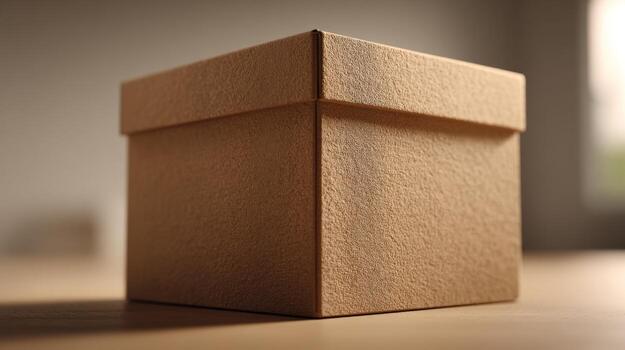
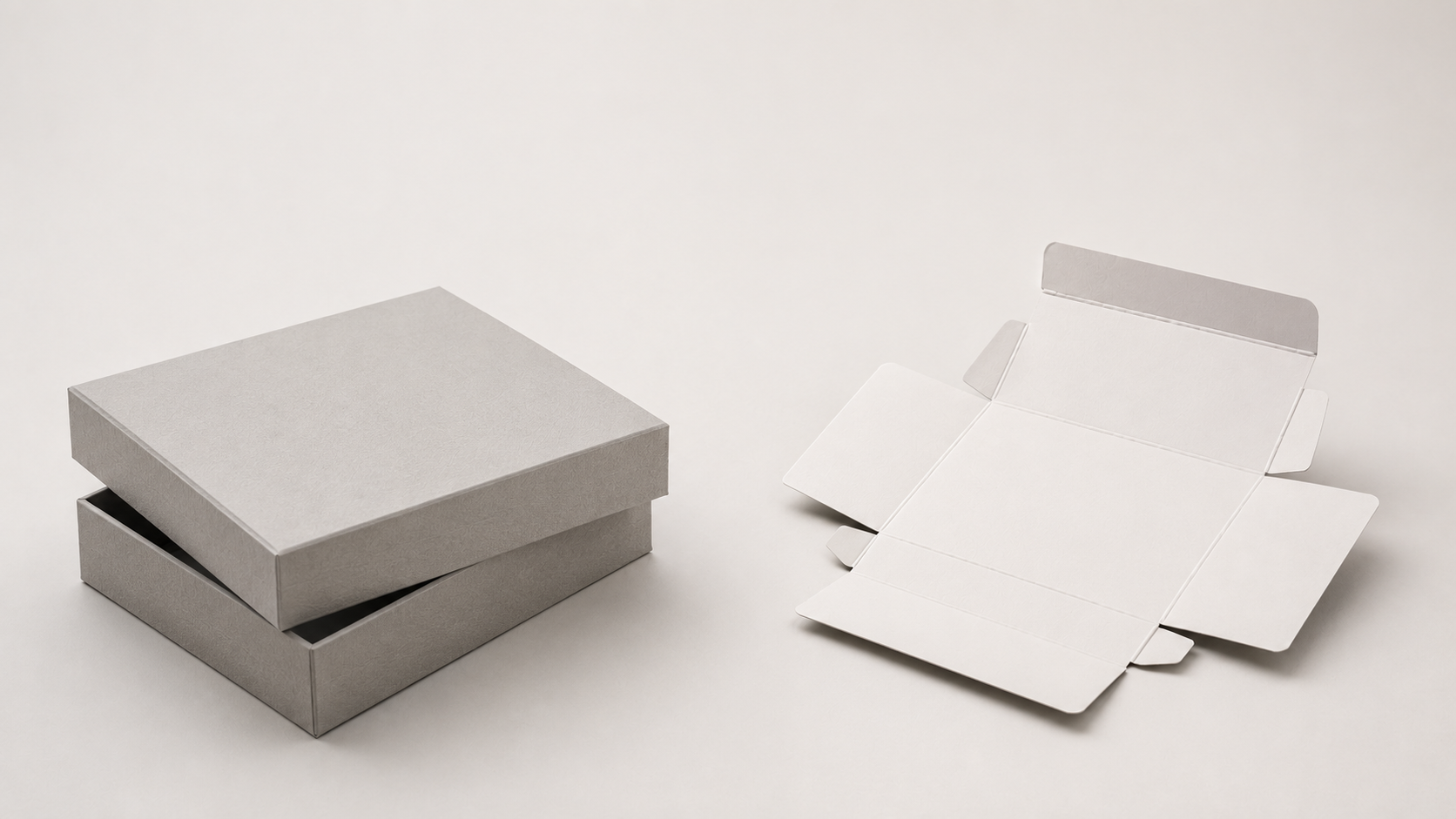
Rigid boxes are constructed from a thick, non-folding paperboard, usually kappa or greyboard, wrapped in a printed paper or laminate. Because the core doesn't fold, the box holds its shape permanently and doesn't collapse flat, which gives it a substantial, premium feel straight out of the box.
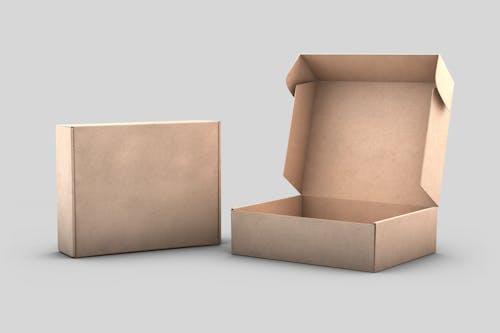
Folding cartons are made from a single sheet of thinner, printable board that is die-cut and scored so it folds flat for shipping and storage, then pops or is glued into shape at the point of use or packing. This makes them far more efficient to ship and store before they're filled, at the cost of the rigid box's permanent, solid-feeling structure.
- Rigid boxes use a thick, non-folding core wrapped in printed material.
- Folding cartons use a single scored sheet that folds flat until assembled.
- Rigid boxes hold their shape permanently; folding cartons collapse flat before use.
- Construction method is the main driver of both cost and perceived quality.
Let product value guide the decision
Rigid boxes tend to suit higher-value products, such as jewellery, electronics, or gifting sets, where the unboxing experience itself is part of what the customer is paying for. The added cost of a rigid box is easier to justify when it's a small fraction of the product's overall price.
Folding cartons work well for a much wider range of products, including anything sold at higher volume or lower price points, since the lower per-unit cost keeps packaging from eating into margin on products where the box isn't the main selling point.
- Use rigid boxes for higher-value products where unboxing is part of the experience.
- Use folding cartons for higher-volume or lower-price-point products.
- Compare packaging cost as a percentage of product price, not just as an absolute number.
- Avoid rigid boxes purely for perceived prestige if the cost doesn't fit the product's price point.
Factor in shipping and storage before deciding
Rigid boxes take up their full assembled volume during storage and outbound shipping, since they don't collapse flat. This increases warehousing space and freight cost, particularly for larger order volumes, and is worth calculating before committing to the format for a large run.
Folding cartons ship and store flat, which significantly reduces volume and freight cost before assembly, making them a more practical choice when order volumes are large or when the brand assembles cartons in-house closer to the point of sale.
- Rigid boxes ship and store at full volume, increasing freight and warehousing cost.
- Folding cartons ship flat, reducing volume and freight cost significantly.
- Calculate freight cost per unit for large orders before committing to rigid boxes.
- Consider flat-packed cartons if assembly can happen closer to point of sale.
Consider durability needs during transit and use
Rigid boxes generally offer better structural protection during shipping and handling, since the thick core resists crushing better than a folded carton. This matters more for fragile products or for packaging that will be reopened and reused multiple times.
Folding cartons can still perform well in transit when designed with adequate wall thickness and appropriate internal inserts, but they are more prone to crushing under heavy stacking or rough handling than a rigid box of comparable size.
- Use rigid boxes for fragile products or packaging meant to be reused.
- Use appropriate internal inserts in folding cartons to improve protection.
- Rigid boxes generally resist crushing better under stacking and rough handling.
- Test both formats under realistic shipping conditions before finalising for fragile items.
Don't assume it has to be one or the other
Some products use a hybrid approach, such as a folding carton as the primary shipping unit with a rigid inner box or insert for the item itself, which balances shipping efficiency with a premium unboxing moment for the specific product inside.
This is worth considering when the outer shipping box doesn't need to carry the brand's premium impression, but the product itself benefits from a more solid, considered presentation once opened.
- Consider a hybrid approach with a folding carton outer and rigid inner packaging.
- Use this when shipping efficiency matters more for the outer box than the inner presentation.
- Confirm the hybrid approach doesn't add unnecessary assembly complexity at scale.
- Request a sample of the full hybrid assembly before committing to production.
Common questions
Are rigid boxes always more expensive than folding cartons?
Generally yes, both in material cost and in shipping cost, since rigid boxes don't collapse flat and take up more volume during storage and transit.
Can folding cartons still look premium?
Yes. With the right stock, finish and structural design, folding cartons can look premium, though they won't match the permanent rigidity of a true rigid box.
Which format is better for e-commerce shipping?
Folding cartons are usually more practical for e-commerce due to lower shipping volume and cost, unless the product is high-value enough to justify a rigid box's added protection and presentation.