A luxury paper bag is judged on how it looks in the first few seconds, but it's judged on how well it holds up for the rest of the day. Handle type, paper weight and gusset construction determine whether a beautifully printed bag actually survives being carried, not just photographed.
Choose a handle type based on expected load
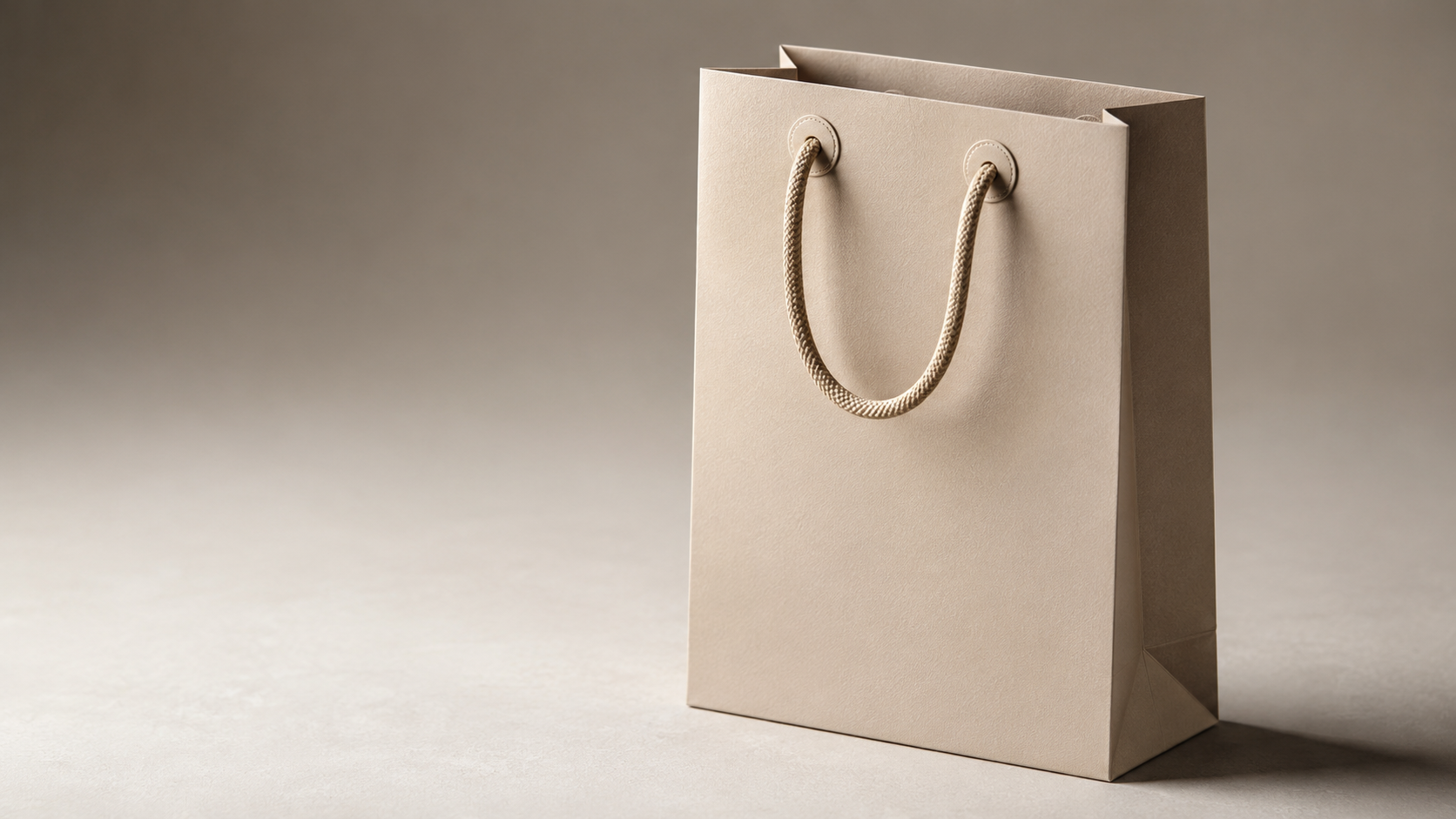
Rope or cotton cord handles are the most common choice for retail and gifting bags, offering a premium feel and reasonable load capacity when properly reinforced at the attachment point. Ribbon handles suit lighter items and smaller bags, where the visual detail matters more than heavy load-bearing.
Die-cut paper handles, cut directly from the bag's own board, work well for structural, boxy bag shapes and avoid a separate attachment step, but they generally suit lighter to medium loads better than rope handles do.
- Use rope or cord handles for medium-to-heavier retail and gifting bags.
- Use ribbon handles for lighter items and smaller bag formats.
- Use die-cut paper handles for structural, boxy bags with lighter loads.
- Match handle choice to the heaviest item the bag is realistically expected to carry.
Reinforce the handle attachment point, not just the handle itself
Most paper bag failures happen at the point where the handle meets the bag, not in the handle material itself. A reinforced eyelet, patch or internal fold at the attachment point spreads the load across a wider area of the paper, reducing the chance of tearing under weight.
This is worth specifying explicitly for bags intended to carry moderate to heavy items, since a standard unreinforced attachment can fail even when the handle material and bag paper are both otherwise strong enough for the load.
- Specify reinforced eyelets or patches at the handle attachment point for heavier bags.
- Understand that most bag failures occur at the attachment point, not the handle itself.
- Request an internal reinforcing fold for bags expected to carry moderate to heavy loads.
- Test a sample bag with the expected maximum load before a full production run.
Pick a GSM that matches the bag's gusset construction
Paper bags with a wide gusset, meaning a deeper, boxier base, need a heavier GSM to hold their shape once filled, since the flat panels have more surface area to bow or sag under weight. Flatter, envelope-style bags with a narrow gusset can use a lighter stock since they carry less structural load per panel.
As a general guide, most retail luxury bags use stock in the 170-250 GSM range, with the higher end reserved for larger, boxier formats or bags expected to carry heavier retail items.
- Use heavier GSM for bags with a wide, boxy gusset construction.
- Lighter GSM can work for narrow-gusset, flatter envelope-style bags.
- Most luxury retail bags use stock in the 170-250 GSM range.
- Reserve the higher end of the GSM range for larger or heavier-load bag formats.
Match the finish to how the bag will be seen and reused
Matte lamination is a common default for luxury bags since it resists fingerprints and scuffing during repeated handling, which matters for bags customers are likely to reuse. Gloss lamination makes colour and branding pop more but shows scuffs and fingerprints more readily over time.
Spot UV or foil detailing on a matte base is a common way to add a premium highlight, such as a logo or brand mark, without losing the fingerprint-resistant benefit of the matte finish across the rest of the bag.
- Use matte lamination as a durable default for bags likely to be reused.
- Use gloss lamination when colour vibrancy matters more than handling durability.
- Combine spot UV or foil on a matte base to highlight a logo without losing durability.
- Consider how many times the bag is likely to be reused when choosing the finish.
Confirm base and side panel construction for standing bags
Bags meant to stand upright on a shelf or counter need a reinforced base panel, often a separate heavier board insert glued into the base, since the bag paper alone typically isn't stiff enough to support the bag's own weight when filled.
It's worth confirming whether the bag is expected to stand upright unsupported or simply be carried, since this changes both the base construction requirement and the overall cost of the format.
- Use a reinforced base insert for bags meant to stand upright when filled.
- Confirm upfront whether the bag needs to stand unsupported or only be carried.
- Factor base reinforcement into the cost estimate for standing bag formats.
- Request a filled sample to check base stability before finalising the order.
Common questions
What GSM is best for a luxury retail paper bag?
Most luxury retail bags use stock in the 170-250 GSM range, with heavier weights reserved for larger, boxier bags or heavier expected loads.
Why do paper bag handles usually fail at the attachment point?
The attachment point concentrates load onto a small area of paper. Without reinforcement such as an eyelet, patch or internal fold, this point is more likely to tear than the handle material itself.
Is matte or gloss lamination better for a paper bag?
Matte lamination generally holds up better to repeated handling and resists fingerprints, making it a common default, while gloss suits bags prioritising colour vibrancy over reuse durability.