Garment labels are small, but they're one of the most handled and most durability-tested pieces of branding a product carries, since they go through wear, washing and repeated contact with skin. Choosing between woven and printed construction affects how long the label lasts and how much design detail it can carry.
Understand how each label is actually made
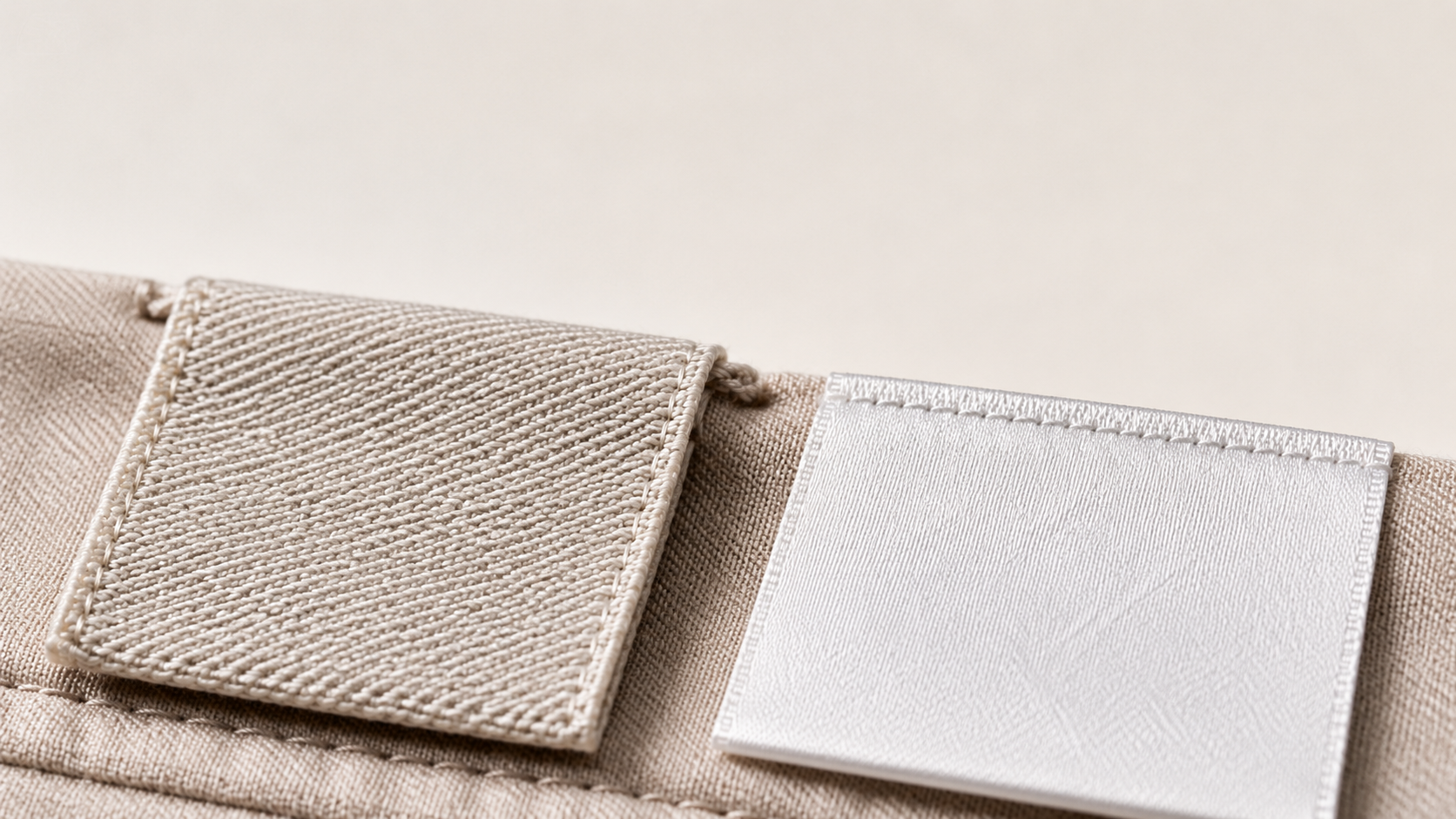
Woven labels are constructed by weaving coloured threads together on a loom to form the design directly in the fabric, similar to how the base garment fabric itself is made. This gives the label a raised, textile feel and makes the design part of the material rather than sitting on top of it.
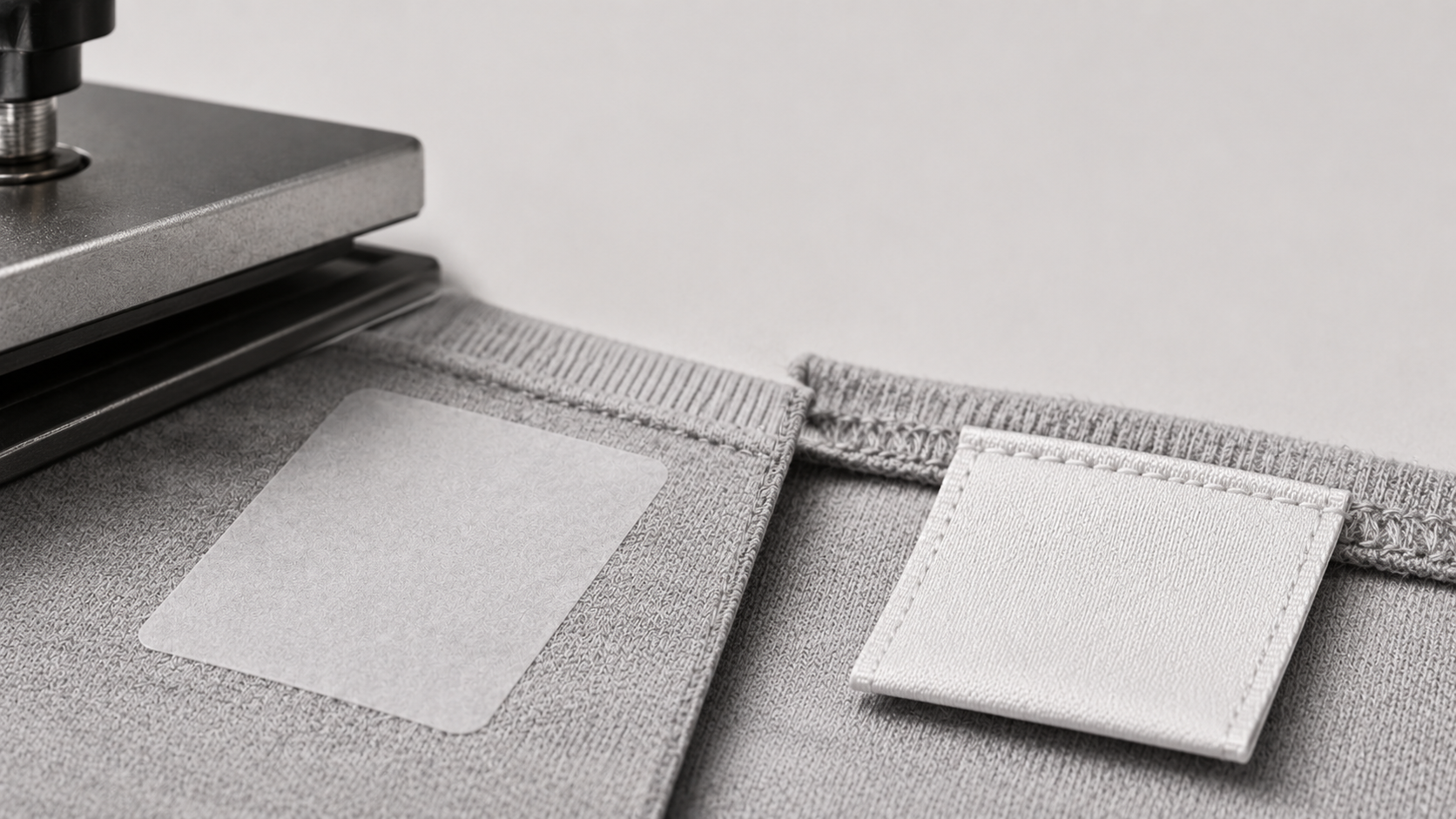
Printed labels apply ink or dye onto a fabric base, such as satin, taffeta or cotton tape, using heat transfer or direct printing methods. This keeps the label flat and smooth to the touch, since the design sits on the surface rather than being woven into the thread structure.
- Woven labels form the design directly from woven thread, giving a textile, raised feel.
- Printed labels apply ink onto a fabric base, keeping the surface flat and smooth.
- Woven construction makes the design part of the material itself.
- Printed construction is generally faster and cheaper to produce for simple designs.
Match the choice to design detail and colour count
Woven labels handle fine detail and small text reasonably well up to a point, but very intricate designs, gradients or photographic detail don't translate cleanly into a woven structure, since the weave resolution has physical limits. Adding more colours to a woven label also increases cost, since each colour typically requires a separate thread setup.
Printed labels handle fine detail, gradients and higher colour counts far more easily, since the design is applied as ink rather than built from thread, making them a better fit for logos with complex artwork, fine typography or photographic elements.
- Use woven labels for simpler logos, wordmarks and moderate colour counts.
- Use printed labels for detailed artwork, gradients or higher colour counts.
- Expect woven label cost to rise with each additional thread colour.
- Check a woven proof carefully for fine text, which can blur at small sizes.
Consider durability and how the garment will be cared for
Woven labels generally hold up better to repeated washing, drying and general wear, since the design is embedded in the weave rather than sitting as a surface layer that can crack, peel or fade over time. This makes woven labels a common choice for garments expected to be washed frequently over a long lifespan.
Printed labels can perform well for their expected lifespan, but depending on the printing method and ink used, they may show more visible wear, fading or peeling after many wash cycles compared with an equivalent woven label. Confirming the expected wash count and care instructions helps match the label type to the garment's real use.
- Use woven labels for garments expected to be washed frequently over a long lifespan.
- Printed labels can still perform well but may show wear sooner after many wash cycles.
- Confirm expected wash count and care instructions before finalising label type.
- Ask about ink and printing method durability if choosing a printed label for heavy-use garments.
Think about feel against skin, not just visuals
Woven labels have a slightly raised texture, which some brands lean into as a tactile brand detail, but this same texture can cause irritation for garments where the label sits directly against skin, such as at the back of a collar. Printed labels are generally flatter and softer against skin, which is why many brands use a printed label specifically for neck labels even when using woven labels elsewhere on the garment.
It's worth deciding label type by placement rather than applying one type across the entire garment, since the comfort requirements at a neckline are different from a label sewn into a side seam or hem.
- Consider printed labels for neck labels where comfort against skin matters most.
- Woven labels can suit less skin-contact placements like side seams or hem tags.
- Avoid applying one label type uniformly if placement comfort needs vary across the garment.
- Test label comfort on an actual garment sample, not just a swatch, before finalising.
Weigh cost against brand impression
Woven labels are generally perceived as a slightly more premium detail, given their textile construction and durability, and are common on garments positioned at a higher price point. Printed labels are typically more cost-effective, particularly for larger colour counts or detailed designs, and are a practical choice for higher-volume, lower-price-point garments.
Neither type is inherently better; the right choice depends on where the garment sits in the brand's price range and how much the label itself contributes to the perceived quality of the product.
- Consider woven labels for higher price-point garments where perceived premium detail matters.
- Consider printed labels for higher-volume or lower-price-point garments needing detailed designs.
- Compare per-unit label cost against the garment's overall price point.
- Request samples of both types before committing to a large garment run.
Common questions
Which label type lasts longer through washing, woven or printed?
Woven labels generally hold up better over repeated washing since the design is embedded in the weave, while printed labels can show more fading or peeling after many wash cycles depending on the ink and method used.
Can woven labels handle detailed logos and gradients?
Woven labels handle simpler logos and text well, but very intricate designs, gradients or photographic detail generally translate better onto a printed label.
Should neck labels be woven or printed?
Printed labels are often preferred for neck labels since they sit flatter and softer against the skin, while woven labels can feel raised and are sometimes better suited to less skin-contact placements.